Big Glass of Beer, Letter H: Maximizing Your Digital Design Assets
In the rapidly evolving world of digital creation, having access to high-quality, versatile graphic elements can significantly streamline your workflow. Whether you are a seasoned graphic designer, a small business owner crafting invitations, or a hobbyist exploring handmade crafts, the right asset saves time and elevates professionalism. One such resource that has garnered attention for its specific utility and aesthetic appeal is the Big Glass of Beer, Letter H vector artwork. This piece is not merely a decorative clipart; it is a functional design element engineered for scalability and clarity across various mediums.
However, possessing a high-resolution file does not automatically guarantee a successful project. Many creators overlook critical technical details regarding file formats, color profiles, and usage rights, leading to subpar results or wasted resources. Understanding how to properly evaluate and implement this specific digital asset is crucial for achieving the desired outcome in logo design, wall art, or printed materials.
Understanding the Asset Specifications
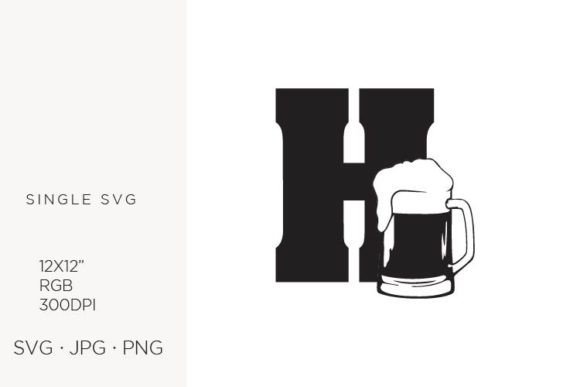
The Big Glass of Beer, Letter H is typically distributed as a zip file containing three distinct formats: SVG, JPG, and PNG. Each format serves a unique purpose in the design ecosystem. The core value lies in the fact that these files are created in Adobe Illustrator, ensuring they originate from a true vector source. The artboard size is standardized at 12x12 inches with a resolution of 300 DPI in the RGB color palette. While this sounds straightforward, misinterpreting these specifications is a common pitfall.
For instance, the RGB color profile is ideal for screen-based applications such as web design, social media graphics, and digital invitations. However, if you intend to use this artwork for physical printed paper items like stationery or announcements, relying solely on the RGB JPG without converting to CMYK can result in dull or inaccurate colors. Professional printers often require CMYK files to ensure color fidelity. Ignoring this distinction can lead to costly reprints and dissatisfaction with the final product.
Common Mistakes in File Selection and Usage
One of the most frequent errors creators make is choosing the wrong file format for the task at hand. Let’s break down the implications of using each format incorrectly.
- Misusing the JPG: The included JPG file is raster-based. While it offers 300 DPI quality, it lacks transparency. If you place this over a colored background for a party decor item or a website banner, you will see an unsightly white box around the beer glass. This limits its versatility and forces unnecessary editing work.
- Ignoring the SVG Potential: The SVG (Scalable Vector Graphics) file is the most powerful component of this package. It allows for infinite scaling without pixelation. Beginners often ignore this format because it requires specific software to edit. By sticking to the PNG or JPG, you limit your ability to resize the Big Glass of Beer, Letter H for large-format prints like wall art or banners without losing sharpness.
- Overlooking Transparency in PNGs: The PNG file provided has a transparent background, which is excellent for layering. However, some users attempt to edit the PNG directly in basic photo editors, causing jagged edges or loss of quality. It is better to use the SVG for any structural changes and only export to PNG when the design is finalized.
Impact on Quality and Efficiency
These mistakes directly affect the usability and efficiency of your projects. Using a low-resolution raster image for a large print job results in pixelation, which undermines the professional appearance of your brand or craft. For entrepreneurs selling handmade cards or custom stationery, perceived quality is paramount. A blurry or poorly integrated graphic can deter customers and harm your reputation.
Furthermore, inefficiency arises when designers spend hours trying to remove backgrounds from JPGs or upscale low-quality images. By leveraging the vector nature of the original Adobe Illustrator file, you can adjust colors, modify shapes, and resize the letter H and beer glass instantly. This flexibility is essential for marketers and bloggers who need to adapt visuals quickly for different platforms while maintaining brand consistency.
Practical Advice for Optimal Results
To avoid these pitfalls, adopt a strategic approach when working with the Big Glass of Beer, Letter H digital graphics elements. Start by assessing your end goal. If you are creating a logo or a large-scale print, open the SVG file in a vector-compatible program like Adobe Illustrator, Inkscape, or Affinity Designer. This ensures you are working with clean paths and anchor points.
For web design and digital announcements, the PNG file with a transparent background is your best friend. It integrates seamlessly into websites and email newsletters without requiring additional masking. Ensure you check the dimensions before uploading to maintain fast load times without sacrificing clarity.
If you are producing physical items like invitations or party decor, consider the printing process. Convert your final design to CMYK if sending to a professional printer. Test print a small sample to verify color accuracy. For home printing, the 300 DPI JPG may suffice for simple projects, but always ensure your printer settings match the file resolution to avoid blurriness.
What to Check Before Downloading or Buying
Before committing to using this asset in a commercial project, verify the licensing terms. While many digital marketplaces offer broad usage rights for handmade craft items and printed goods, restrictions may apply to mass production or resale of the digital file itself. Always read the fine print to ensure compliance with intellectual property standards.
Additionally, check the compatibility of the SVG file with your cutting machines if you are involved in handmade crafts. Most modern cutters accept SVG files, but simplifying complex paths may be necessary for smooth cutting. The clean lines of the Big Glass of Beer, Letter H usually translate well, but a quick test cut on scrap material can save time and material waste.
In summary, the Big Glass of Beer, Letter H is a versatile tool for creators across various industries. By understanding the technical nuances of SVG, PNG, and JPG formats, and by respecting color profile requirements, you can maximize the potential of this digital asset. Avoid common mistakes related to file selection and resolution, and always prioritize vector editing for scalability. This approach ensures high-quality results, whether you are designing a logo, crafting party decor, or enhancing web content.